
Garage Door Opener Buzzing but Not Lifting? What's Failing Inside
October 15, 2026
Why Garage Door Springs Carry Such an Enormous Load
| Spring Type | Location | How It Works | Common On |
|---|---|---|---|
| Torsion | Above the door, on a metal shaft | Twists and uncoils to lift | Heavier, modern doors |
| Extension | Along the horizontal tracks | Stretches and contracts | Lighter, older doors |
Torsion springs are more durable and offer a more controlled lift. Extension springs are still widely used but tend to wear faster because of the lateral stress they absorb with each cycle.
What a Technician Actually Checks
Diagnosing a crooked door properly means looking at more than the bent-looking section. A thorough check walks both vertical tracks for plumb, confirms the horizontal tracks hold their proper slight downward slope toward the back of the garage, inspects every mounting bracket for looseness or separation from the framing, checks roller condition at each hinge point, and looks at spring and cable balance by testing how the door behaves when disconnected from the opener. That combination is what tells a technician if the fix is a simple hardware tightening, a roller swap, a track section replacement, or something upstream like a spring or foundation issue that the crooked track is only symptomatic of.
Skipping straight to "just push the track back into place" without that fuller check is how the same problem comes back a few weeks later, often worse than before, because the actual cause was never addressed.
Quick Answer: When a garage door opener buzzes but the door does not rise, the motor is getting power but its effort is not reaching the door. The usual culprits are a disconnected trolley, a broken spring that leaves the door too heavy to lift, a stripped plastic drive gear, a failing start capacitor, or a slipping collar on the torsion bar. A quick test tells you which family of problem you have: pull the red release handle and lift the door by hand. If it feels like dead weight, the spring is the issue. If it moves easily, the trouble is inside the opener.
You press the button on a cold morning and hear it right away: a low buzz or hum from the ceiling, maybe a click, and then nothing. The light on the opener may even come on. The door does not move an inch. You press it again, and the same buzz repeats, a little weaker each time.
That sound is the opener telling you that it is trying. Power is reaching the unit and the motor is doing something. What is missing is the last link, the part that turns that effort into a door rising on its tracks. Finding which link is broken is mostly a matter of reading the clues, and most of them are easy to spot from the garage floor without touching anything under tension.
What the Buzzing Actually Means
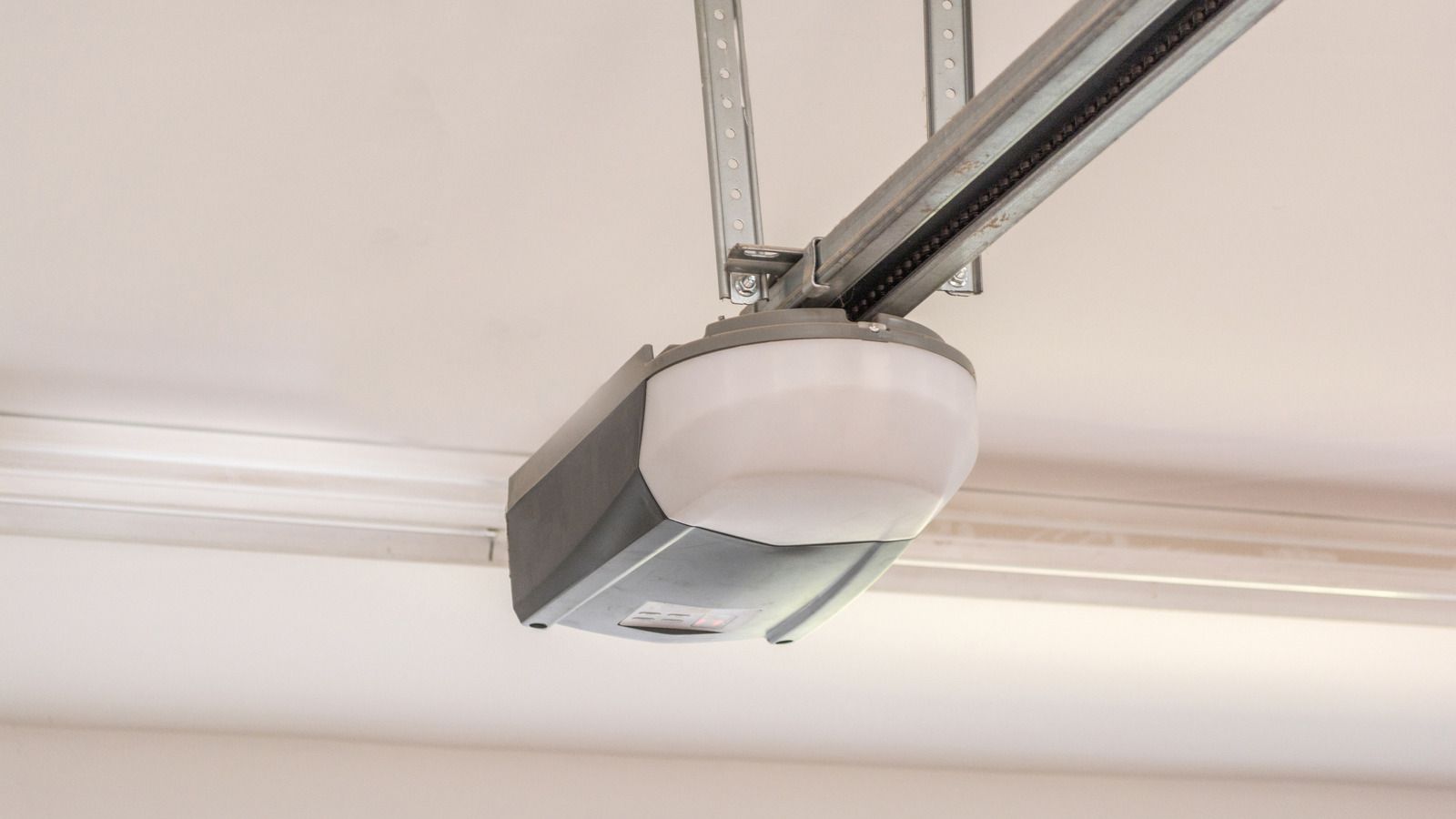
An opener is a chain of parts. The motor spins a gear, the gear drives a chain, belt, or screw, and a trolley carries that motion along the rail and pulls an arm connected to the top of the door. Meanwhile, the springs above the door carry most of its weight so the motor only has to guide it. If any link in that chain lets go, the motor can run while the door stays put.
The sound itself gives you a first hint. A hum that lasts a second or two and stops often points to a disengaged door or a collar slipping on the shaft. A hum that lasts around half a minute usually means the motor is running freely because the door is not connected to the trolley. A short, strained buzz followed by silence suggests a motor that cannot get started, which often traces back to a failing capacitor. A longer grinding or whirring hum with no movement often means a gear is spinning without catching anything.
Start With the Spring Test
Before you suspect the opener, rule out the spring. This is the single most useful check, and it explains a large share of buzzing complaints. Springs do the heavy lifting. A typical residential door weighs well over a hundred pounds, and an opener motor is built to nudge and guide that weight, not to carry it. When a spring breaks, the door becomes dead weight and the motor simply cannot raise it.
Here is how to check safely. Close the door if it is open, or make sure it is fully down. Pull the red emergency release cord so the door disconnects from the opener. Then try lifting the door by hand, keeping your fingers clear of the panel joints. A healthy door feels light and stays put near waist height. A door with a broken spring feels extremely heavy, may barely budge, or may slam back down when you let go.
If that is what you find, stop right there. Do not keep pressing the button, and do not try to lift the door fully open to prop it. The opener has been working against a load it was never designed for, and repeated attempts can overheat the motor or strip the gear in the process. A broken spring needs a trained technician, and the door should stay closed until one arrives.
Warning: Springs hold enough stored force to cause serious injury. Never try to adjust, unwind, or replace a spring or its fittings yourself, and do not lean a heavy door against your body to see how it feels. If the door is heavy to lift by hand, leave the repair to a professional.
If the Door Lifts Easily, the Opener Is the Suspect
When the door rises smoothly by hand with the release pulled, the springs are doing their job, and the problem sits in the opener or its connection to the door. There are four common causes, and each leaves its own clues.
The Trolley Has Disconnected
A disconnected trolley lets the motor run without engaging the door. Reconnect it using the release mechanism; damaged trolleys or arms require inspection.
The Drive Gear Is Stripped
Worn plastic or nylon gears prevent the motor from transferring power. Whirring sounds and gear shavings indicate damage; replacement requires model-specific parts.
The Start Capacitor Is Weak
A failing capacitor prevents the motor from generating sufficient starting torque. Humming, clicking, or overheating shutdowns may occur; electrical inspection is recommended.
The Motor Or Logic Board Has Failed
A seized motor or faulty circuit board relay can cause humming without movement. A technician can determine whether repairing or replacing the opener makes more sense.
Wall Mounted Openers Have Their Own Quirks
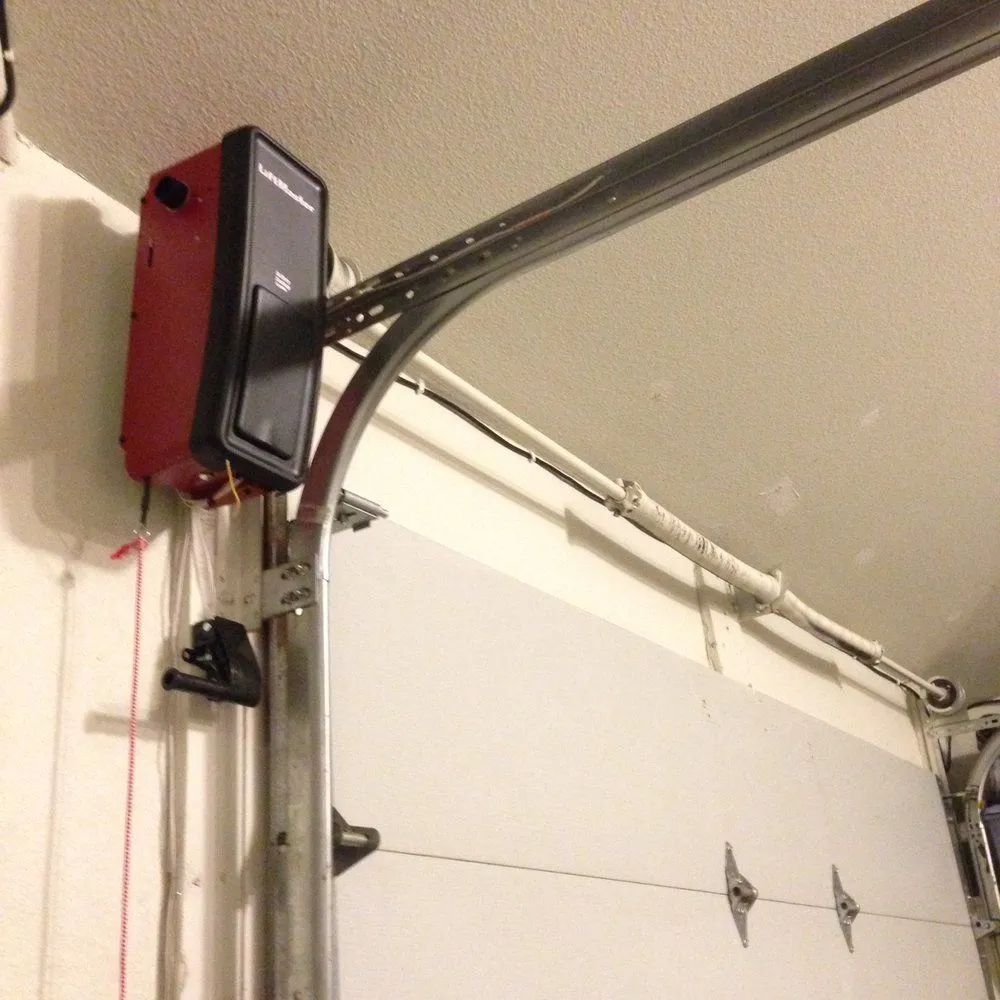
Not every opener hangs from the ceiling. Wall mounted units sit beside the door and turn the torsion bar directly. These have a different failure point. If the unit hums for more than a couple of seconds without moving the door, the collar that grips the shaft may be slipping. If the hum is brief, the door lock or the release may be engaged. Tightening a collar involves working near the torsion assembly, which is a reason to let a pro handle it rather than reaching in yourself.
Tip: Listen and write down what you hear and for how long before you call. A hum of one or two seconds, a hum of about thirty seconds, and a long whirring with shavings on the floor each point to a different part, and that detail helps a technician arrive with the right parts.
What Not to Do While You Wait
A buzzing opener tempts people to try again and again. Resist it. Each attempt sends current through a motor that is not moving, which heats the windings. If the problem is a stripped gear, repeated presses can chew up what remains. If the problem is a broken spring, the motor is straining against a load far beyond its limits.
Unplug the opener, pull the red release cord, and treat the door as a manual door. If the springs are healthy, you can lift it by hand and park it in the open position to get your car out, then close it again with care. If you suspect a spring problem, leave the door closed. Keep kids and pets away from the opener track, and do not stand under a door that is partly open.
Also check the simple things, because they cost nothing. Make sure the door lock is not engaged if your model has one. Confirm the wall control is not in a lock or vacation mode. Look at the rail for anything caught in the trolley path. If a quick check turns up nothing, the problem is inside the unit.
What a Technician Actually Does
A proper visit starts with the same spring test you can do, then moves to the opener. The technician checks the balance of the door, inspects the springs, cables, and rollers, and then looks at the trolley, arm, and rail. With the power off, the housing comes open so the gear, motor, capacitor, and board can be inspected. Each one is tested rather than guessed at.
From there the repair follows the finding. A disengaged trolley is reset. A worn gear is replaced with the right part for your opener. A failed capacitor is swapped. A damaged motor or board may mean replacing the unit, especially on an older model where parts are harder to find. After the repair, the technician cycles the door, checks the force and travel settings, and tests the safety reverse and photo eyes so the door stops and reverses when it should.
Frequently Asked Questions
Why does my garage door opener hum but the door will not move?
The motor runs but its force is not reaching the door. Common causes are a disconnected trolley, broken spring, stripped gear, failing capacitor, or slipping collar. Lifting the door by hand helps separate them.
How can I tell whether it is the spring or the opener?
Pull the red release cord and lift the door by hand. A light door that stays put means the opener is at fault, while a very heavy door points to the spring.
Is it safe to keep pressing the button?
No. Repeated presses strain a motor that is not moving, can overheat it, and may finish a worn gear. Unplug the unit and use the door manually only if the springs are healthy.
Why did this happen on a cold morning?
Cold thickens lubricant, stiffens plastic parts, and stresses a weak capacitor. It can also finish a fatigued spring, and ice under the bottom seal may freeze the door to the floor.
Can a stripped gear be fixed without replacing the whole opener?
Often yes, since many models use a replaceable gear. Whether it makes sense depends on the opener’s age, parts availability, and the condition of everything else inside the housing.
Should I try to replace a capacitor myself?
It is better not to. Capacitors can hold a charge even when unplugged, and a wrong diagnosis wastes time. A technician can test it and confirm the real cause first.
Sorting Out a Buzzing Opener Without Guessing
An opener that hums without lifting is rarely a mystery once the spring is separated from the opener. Testing the door by hand, noting the sound and how long it lasts, and looking for shavings or ice all point toward the failing part. Leaving the button alone until the cause is known keeps a minor repair from becoming a larger one. That small amount of attention also protects the motor and gear from extra wear while the problem waits for a proper fix.
5280 Garage Doors
has served homeowners in Littleton, CO for 20
years, and that time has shown how Front Range cold exposes weak springs, tired capacitors, and worn gears. Testing the spring first, then working through the trolley, gear, capacitor, and board, keeps the diagnosis accurate instead of hopeful. The result is a door that lifts smoothly, a safety reverse that works as intended, and a morning routine that no longer begins with an unwelcome hum from the ceiling.