
Garage Door Off the Track or Crooked? What Knocked It Out of Alignment
August 19, 2026

Why Garage Door Springs Carry Such an Enormous Load
| Spring Type | Location | How It Works | Common On |
|---|---|---|---|
| Torsion | Above the door, on a metal shaft | Twists and uncoils to lift | Heavier, modern doors |
| Extension | Along the horizontal tracks | Stretches and contracts | Lighter, older doors |
Torsion springs are more durable and offer a more controlled lift. Extension springs are still widely used but tend to wear faster because of the lateral stress they absorb with each cycle.
Quick Answer: A garage door that looks crooked or has jumped the track is almost always the result of one of five things: a direct impact from a car or ladder, track hardware that has vibrated loose over years of cycling, a broken spring or frayed cable that let one side of the door drop, worn rollers that have started wandering out of the channel, or a track that has slowly bent or bowed from age and repeated stress. In older Front Range homes, foundation and framing movement from expansive clay soil can also pull the whole opening out of square and take the tracks with it. The cause changes what happens next: some of these are a quick bracket tightening, and some put the door one bad cycle away from coming off entirely.
Why Garage Door Tracks Shift Out of Alignment
You pull into the driveway and something looks off. The door isn't sitting square in the opening anymore — one side rides higher than the other, there's a gap along one edge that wasn't there last month, or the whole panel looks like it's leaning. Maybe you heard a scrape or a pop a few days ago and brushed it off. Now the door hesitates going up, drags along one side, or a roller has actually popped out of the track channel entirely.
A door that's off track or visibly crooked isn't cosmetic. The track is what carries the door's full weight in a controlled path, and once that path is bent, loose, or misaligned, every roller, hinge, and cable connected to it starts working at an angle it wasn't built for. That accelerates wear on everything downstream, and it raises the odds of the door dropping unexpectedly or coming off the rail mid-cycle. Before you touch anything, it helps to know what actually knocked the track out of alignment, because the fix — and how urgent it is — depends entirely on the cause.
Something Hit the Track
The most common reason a track goes crooked is also the simplest: it got hit. A car bumper backing in a little too far, a ladder leaned against the door and then knocked sideways, a bike or lawnmower rolled into the vertical track, a moving box catching the bottom bracket — any of these can bend the track just enough to throw the door off its path. Sometimes the dent is obvious. Other times it's subtle enough that you only notice the effect: the door rides crooked, drags on one side, or a roller starts riding on the edge of the channel instead of inside it.
Impact damage almost always shows up on one side of the door rather than both, which is a useful clue. If the left track looks straight from top to bottom but the right one has a visible kink, dent, or a spot where the metal flares outward, that's your answer. A track bent from impact can sometimes be worked back into shape if the bend is minor and caught early, but once the metal has creased or the mounting brackets have pulled away from the framing, straightening it rarely holds for long. At that point, replacing the damaged section is the more durable fix, because a track that's been bent once has a weak point that tends to give again under the door's full weight.
The Hardware Worked Itself Loose
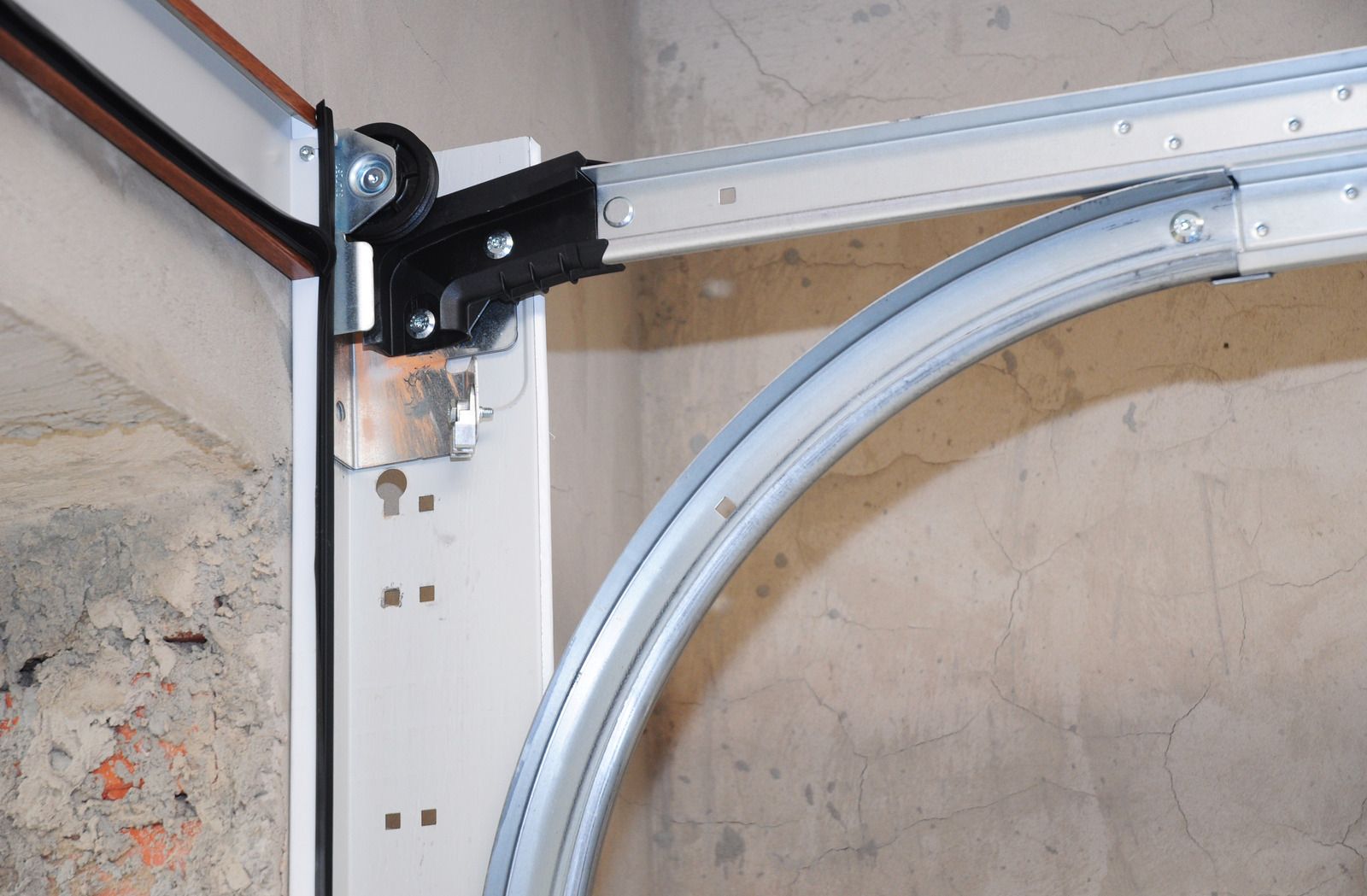
Every track is held to the wall framing and the header by a series of brackets, lag screws, and bolts, and none of that hardware is meant to stay perfectly tight forever. A garage door cycles up and down dozens of times a month, and every one of those cycles sends a small amount of vibration through the track and into its mounting points. Add in Denver's wide day-to-night and season-to-season temperature swings, which expand and contract the metal track and the wood or steel framing behind it at slightly different rates, and you get a slow, steady loosening of screws and bolts that nobody notices happening.
The result is a track that isn't bent at all — it's just no longer held firmly in the position it was installed in. It can rock slightly when the door passes, drift a fraction of an inch with every cycle, or pull away from the wall at one bracket while the rest stay tight. Over months, that drift adds up to a track that's visibly out of plumb or a horizontal section that's sagging where a bracket has backed out. This is one of the more forgiving causes to catch early, since re-tightening or re-anchoring the hardware before the track actually deforms can solve it completely. Left alone, a loose bracket eventually lets the track shift enough that rollers start jumping the channel.
Tip: With the door closed, look down the length of each vertical track from the floor toward the ceiling. A straight track reads as one continuous, unbroken line with no waves, dips, or spots where it juts toward or away from the door panel. If you see the track wobble even slightly when the door cycles, or notice a bracket that's visibly pulled away from the wall, that's loose hardware announcing itself before anything breaks.
A Broken Spring or Frayed Cable Pulled One Side Down
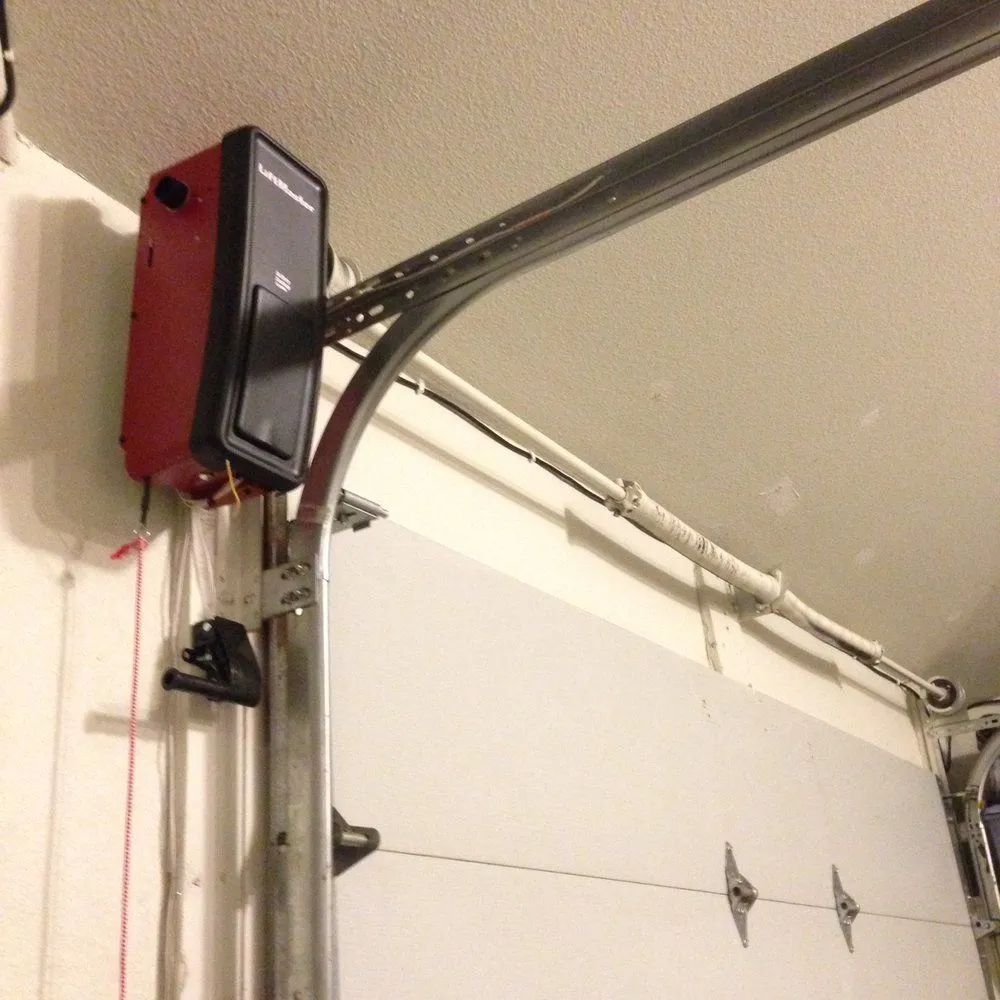
Springs and cables don't just make the door heavy to lift when they fail — they can pull it crooked first. A torsion spring that's losing tension unevenly, or a cable that's starting to fray and stretch on one side, changes how much lifting force reaches each side of the door as it travels. When one side gets less support than the other, that side lags behind, and the door starts climbing the track at an angle instead of moving straight up. On a door with two torsion springs, if one spring has already broken and the other is compensating, the imbalance is often severe enough that you can see the door visibly tilt during the first few inches of travel.
This cause is worth taking seriously because it isn't really a track problem at all — the track is just showing you the symptom of a spring or cable system that's failing. Forcing a crooked door back into position without addressing the spring or cable behind it just repeats the damage on the next cycle, and it puts uneven stress on the roller and track on the overloaded side. If the crookedness gets worse every time you run the door, or if you can see one cable looking slack, frayed, or wound differently than the other, that's a spring-and-cable issue wearing a track-alignment disguise.
Worn Rollers Have Started Wandering
Rollers are the part of the system that actually rides inside the track, and they wear out long before most homeowners think to check them. Steel rollers develop flat spots and rust pitting over years of use; nylon rollers crack, chip, or wear down at the edges where they contact the track walls. Either way, a worn roller no longer fits the channel the way it did when it was new, and a roller that doesn't fit snugly has room to wobble, tilt, or ride up onto the lip of the track instead of staying centered inside it.
A door with a few worn rollers doesn't usually come off the track outright on day one. What you notice first is a door that rattles more than it used to, catches or hesitates at the same spot in every cycle, or develops a slight side-to-side sway as it travels. That sway is the roller working its way toward the edge of the channel a little more with every pass, and eventually one roller rides up and over the track lip entirely, which is when a "noisy door" turns into a door that's actually off track. Roller replacement is one of the more routine parts of garage door upkeep, and catching worn rollers before they climb out of the channel is a lot simpler than dealing with a door that's already derailed.
Foundation and Framing Movement Can Pull the Whole Opening Out of Square
This one surprises a lot of homeowners: sometimes the track itself is fine, and the problem is that the opening around it has moved. Denver and the Front Range sit on expansive clay soil that swells when it absorbs moisture and shrinks as it dries out, and that cycle repeats every year with the seasons. Older homes, homes on a slab, and homes that have gone through a wet spring followed by a dry summer are especially prone to small amounts of foundation or framing shift over time. When the garage's structural opening tweaks even slightly out of square, the tracks — which are bolted to that framing — get pulled along with it.
A door affected by foundation movement usually shows a gap that changes shape rather than a track that's obviously dented. You might notice the gap along the top of the door narrowing on one side while it widens on the other, or a door that used to seal flush now catching unevenly at the corners. This is a harder problem to fix by simply re-tightening the track, because re-anchoring the same track to a frame that's shifted just moves the misalignment somewhere else. In cases like this, it's worth having a technician confirm whether the issue is really the track or the opening itself before spending money on repeated track adjustments that won't hold.
Warning: Never try to force a crooked or off-track door back into position by hand, and don't keep running the opener against a door that's binding or dragging. A door under spring tension that comes loose while someone is working near it can drop suddenly and cause serious injury, and repeatedly cycling a misaligned door through the opener strains the motor, the gears, and whatever roller or bracket is already compromised. If the door is visibly off track, leave it closed and call for a diagnosis rather than troubleshooting it yourself.
What a Technician Actually Checks
Diagnosing a crooked door properly means looking at more than the bent-looking section. A thorough check walks both vertical tracks for plumb, confirms the horizontal tracks hold their proper slight downward slope toward the back of the garage, inspects every mounting bracket for looseness or separation from the framing, checks roller condition at each hinge point, and looks at spring and cable balance by testing how the door behaves when disconnected from the opener. That combination is what tells a technician if the fix is a simple hardware tightening, a roller swap, a track section replacement, or something upstream like a spring or foundation issue that the crooked track is only symptomatic of.
Skipping straight to "just push the track back into place" without that fuller check is how the same problem comes back a few weeks later, often worse than before, because the actual cause was never addressed.
Frequently Asked Questions
Can I push a bent track back into place myself?
Avoid bending or realigning a track yourself while the door remains under spring tension. Connected springs and cables store significant force, making professional adjustment the safer approach for preventing injuries.
How do I know if it's the track or the springs causing the crooked look?
If crookedness worsens while lifting, spring or cable imbalance may be responsible. Dragging, scraping, or rattling at one specific location usually indicates a bent track, loose bracket, or worn roller.
Is a slightly uneven gap along the door really worth fixing right away?
Yes. Small alignment problems can worsen with every cycle, increasing strain on rollers, brackets, and cables. Addressing an uneven gap early may prevent derailment, additional wear, and more extensive repairs later.
Could foundation settling really affect my garage door track?
Yes. Foundation movement can shift the garage opening and affect track alignment. Gradually changing gaps without impact damage may indicate structural movement, especially where expansive soils repeatedly swell and shrink seasonally.
What happens if I keep using a door that's off track?
Continued operation strains the opener, rollers, brackets, cables, and tracks. Existing misalignment can progressively worsen until a roller leaves the channel, potentially causing greater damage and creating a serious safety hazard.
Keeping a Crooked Garage Door Properly Aligned
A garage door that sits crooked or slips off its track usually points to a specific problem somewhere in the system. Impact damage, loose brackets, worn rollers, uneven spring tension, frayed cables, or gradual track movement can all change how the door travels. Identifying the actual source matters because simply repositioning the track may leave the underlying problem untouched. A complete inspection helps determine whether the alignment issue begins with the track, hardware, lifting system, or garage opening itself.
With 20
years of experience, 5280 Garage Doors
understands the conditions that can affect garage door alignment in Littleton, CO. Checking the tracks, rollers, brackets, cables, springs, and structural opening together provides a clearer picture of why a door has shifted. When the cause is addressed rather than only the visible symptom, the entire system can operate more evenly, reduce unnecessary strain on connected components, and maintain the smooth, balanced movement a properly aligned garage door should provide.